
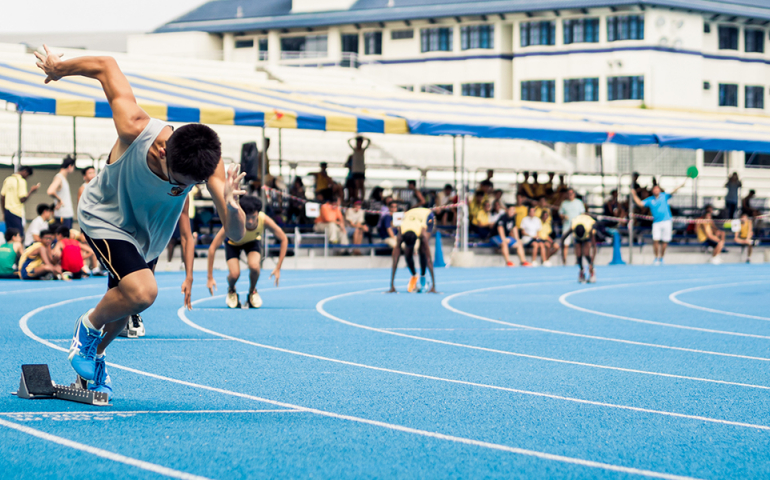
Good vision is perhaps one of the most underrated skills any sports professional possesses – yet improving it is one of the easiest and most effective ways to boost performance.
Whether sport is a serious pursuit or a hobby, there are a couple of quick ways to improve your experience through better vision.
Clearer vision = better performance
Clear vision is closely linked to sports performance, which is why it’s important to have regular eye examinations, whether or not you wear glasses. Your optometrist checks that your eyes are in good health and whether your vision needs correcting – even mild short-sightedness can make it harder to track a fast-moving ball. If you haven’t already, it’s worth asking your optometrist about contact lenses, which won’t slip, fog up or limit your peripheral vision the way glasses can. It’s no surprise that many top athletes wear contact lenses. For those with a competitive streak, having clear vision can make all the difference between winning and losing.
Find out which is your dominant eye

Most people know which is their dominant hand, but many don’t realise they also have a dominant eye. By identifying your dominant eye, you can position yourself for better hand-eye coordination and improved aim.
If you play tennis, golf, hurling, cricket, or any precision sport, try this test – a simple tilt of the head could give you that extra edge:
- Form a triangular space with your hands by overlapping your right thumb and index finger with your left.
- Hold your hands out in front of you at arm’s length.
- Focus on a single object across the room and look at it through the triangle you’ve made.
- Close your left eye.
- If you can still see the object, your right eye is your dominant eye. If not, try closing the right eye. Whichever eye keeps the object visible through the triangular gap is your dominant eye.
You can easily improve your hand-eye coordination by relying more on your dominant eye when aiming – simply by adjusting the position of your head. If you notice one eye seems much weaker than the other, don’t try to fix it yourself – speak to your optometrist, who can check for an underlying problem and recommend the right treatment.
Protect your eyes in sport
Good vision is only half the story – it’s just as important to keep your eyes safe and comfortable while you play:
- Choose daily disposable lenses for sport – there’s no cleaning, and you can simply throw them away after a sweaty session
- If you have astigmatism, toric lenses are designed to stay stable on the eye as you move
- Wear sports sunglasses with UV protection for outdoor sports, and protective eyewear for racket and contact sports
- Keep lenses away from water – here’s what you need to know about swimming with contact lenses
For more tips, read our guide to exercising with contact lenses, or see the jobs that require perfect vision.
If you’ve noticed an improvement in your sport after improving your vision, or have other tips to share, we’d love to hear from you!