
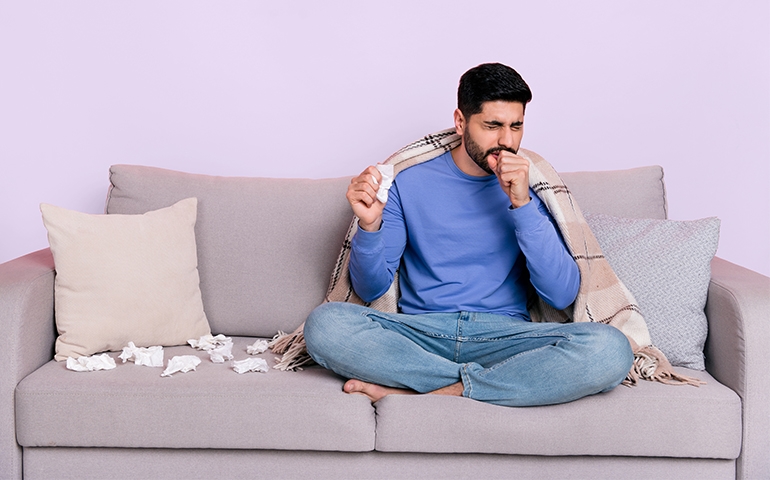
Nobody enjoys cold and flu season. While we can pick up a cold or flu at any time of year, the peak typically falls between January and February — right after the Christmas period when many people have been travelling, and in the cold conditions where viruses thrive and can cause problems for our eyes and general health.
If you’re blocked up, coughing and on the verge of a sneeze, here are some tips on how to get through it while protecting your eyes.
Is it safe to wear contact lenses when you have a cold or flu?
While it is generally considered safe to wear contact lenses when you have a cold or flu, it is better to avoid it and switch to glasses instead.
Symptoms such as sneezing or a runny nose can transfer a lot of unwanted germs from your hands to your face, and these can end up in your eyes if you’re not careful — potentially leading to an infection such as conjunctivitis. This can happen whether you wear lenses or not, but limiting how often you touch or rub your eyes until you feel better is the sensible approach.
Since contact lenses have a reasonably long shelf life, there is no rush to use them. They will be ready and waiting once you’re back to full health.
How to wear contact lenses safely if you have a cold, flu or Covid symptoms
While we recommend giving your eyes a break from lenses when you are unwell, if you do need to wear them for any reason, please follow these hygiene guidelines:
Limit your wearing time — only wear your lenses when necessary. If you normally wear them every day, give yourself a few days off, and reduce the number of hours you wear them when you do put them in.
Maintain thorough hand hygiene — the most common way for germs to reach your eyes is through your hands. Follow the same basic hygiene routine you would normally use when handling lenses, but with extra care. Wash your hands thoroughly for at least 20 seconds with soap and warm water — ideally antibacterial soap. Dry every part of your fingers and nails, where bacteria can hide, before touching your lenses.
Consider switching to daily disposables — packaged in sterile, single-use blister packs, daily disposables require no ongoing cleaning routine that could increase the risk of contamination.
Don’t forget to disinfect accessories — if you’ve picked up your lens case before washing your hands, it needs a thorough clean too. Accessories such as solution bottles and lens cases can become carriers or breeding grounds for bacteria. Keep them properly disinfected. Remember: it is recommended to replace your lens case at least once a month.
Use dry eye drops — when you are fighting an infection or virus, your eyes’ tear production can be affected, leading to dryness. Some medications used to treat illness can also make dry eye worse. Try to keep your lenses lubricated with drops such as Blink Intensive Triple-Action eye drops, which can be used without removing your lenses to avoid contamination. Staying well hydrated by drinking plenty of fluids and water can also help combat dry eyes.
Be alert to eye infections — if you think you may have developed an eye infection, stop wearing your lenses and discard them along with your lens case. Contact your optician immediately. Do not share towels with others, as this could spread the infection. Only return to wearing lenses when your optician advises it is safe to do so.

How to reduce your chances of catching a cold
Following the basic care habits you would normally use with contact lenses — such as washing your hands thoroughly and avoiding rubbing your eyes — goes a long way. You can also adopt the following healthy habits to limit your exposure to illness:
- Wash your hands thoroughly with warm water and soap (for 20 seconds or more)
- If you don’t have access to soap, use hand sanitiser gel
- Avoid touching your eyes, mouth and nose without washing your hands first
- Do not share towels or cloths with others in your household, as this could pass on the infection
- Avoid close contact with people who are unwell
- Stay away from very crowded spaces, especially where people may be sick
- Disinfect frequently touched objects such as your phone, door handles and surfaces on public transport
- Wear a mask if you need to be in a crowded environment
So, should you wear contact lenses if you feel unwell?
In most cases, no. If you are not feeling well, the best thing is to give your eyes (and your body) the rest they need and avoid wearing contact lenses. Use your glasses to see clearly until your symptoms have passed. Once you have recovered, you will be ready to go back to wearing your favourite lenses again.