

Macular degeneration is one of the leading causes of vision loss in Ireland. The condition typically develops as we age, and understanding it early is key to protecting your sight.
What is macular degeneration?
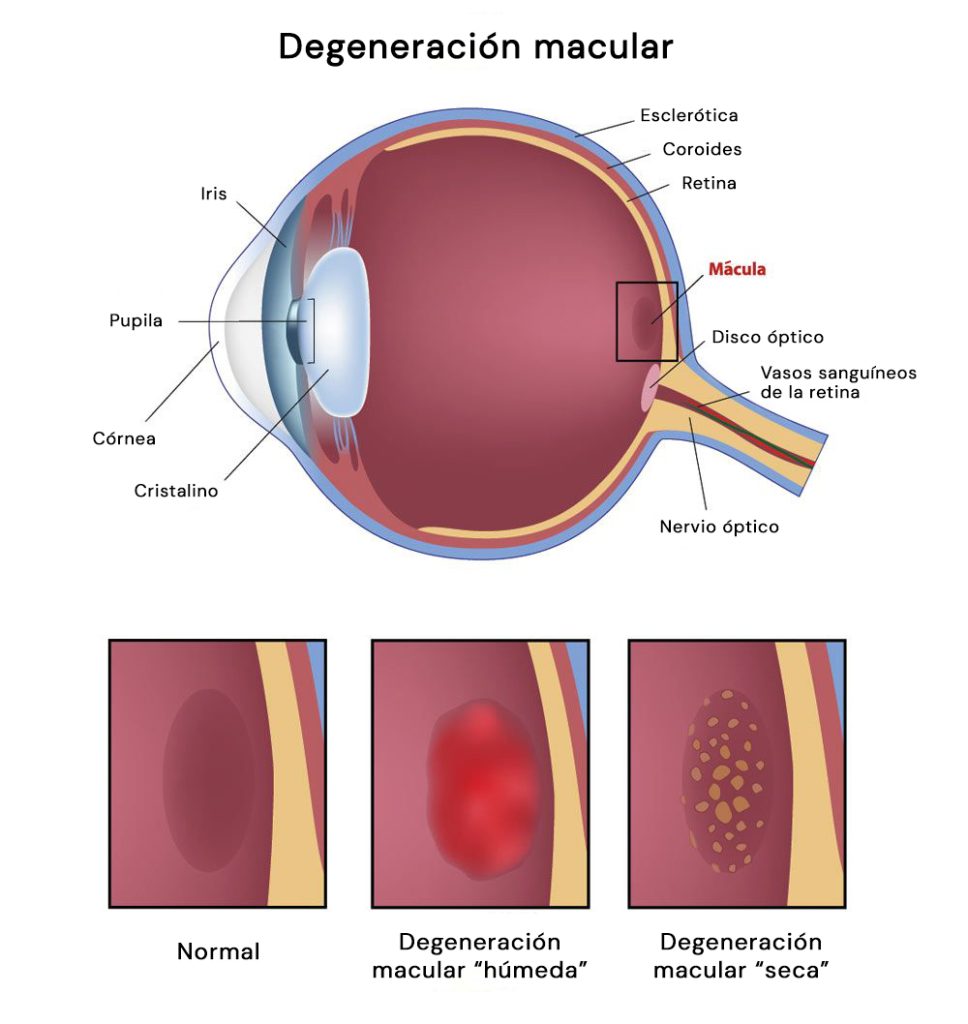
Age-related macular degeneration (AMD) is an eye condition that leads to the progressive loss of central vision. The macula is a small area at the centre of the retina packed with cones – the light-sensitive cells responsible for sharp central vision. AMD occurs when these cells begin to break down, which can result in blurred vision, faded colours and difficulty recognising faces.
Who is most at risk of macular degeneration?
Women are generally more likely to develop AMD, though the exact reason is not fully understood. The condition is also more common in older people – it is estimated that around one in ten people over 65 have some form of AMD. Smoking, a family history of AMD and high blood pressure also increase your risk.
Symptoms of macular degeneration
Depending on the type of macular degeneration, symptoms may develop gradually or over the course of just a few days. You may notice some loss of central vision, making it harder to see objects directly in front of you, while your peripheral vision remains intact. Straight lines, such as door frames, may also start to look wavy or distorted. Over time, this can result in a permanent blind spot in the centre of your vision.
Dry age-related macular degeneration
Dry AMD is caused by the build-up of fatty deposits or proteins under the retina called drusen. This typically happens as we age, so dry AMD is more common in older people. It is the most common form and usually causes vision to deteriorate slowly over many years. Around one in ten cases of dry AMD progress to wet AMD.
Wet age-related macular degeneration
Wet AMD is a more serious form of the condition and can result in vision loss within just a few days or weeks. It occurs when abnormal new blood vessels grow under the macula. These vessels can leak and bleed, causing scarring and severe vision damage. Wet AMD can often be treated with injections into the eye, so if you notice sudden blurring or distortion in your central vision, see your optometrist or GP urgently.
How to reduce your risk of age-related macular degeneration
1) Stop smoking
Smoking is the biggest risk factor for AMD that you can change. Smokers are significantly more likely to develop AMD, and to develop it earlier, because smoking increases oxidative stress in the bloodstream and the eyes and speeds up the condition’s progression.
2) Look after your heart and blood pressure
High blood pressure (hypertension) is linked to macular degeneration and may reduce blood flow in the vascular layer of the eye (the choroid). This can prevent the eye from receiving sufficient oxygen, which may increase the risk of wet AMD and central vision loss. Make sure you take any prescribed medication for heart or blood pressure conditions and follow your doctor’s advice.
3) Increase antioxidants in your diet
In AMD, the retina becomes sensitive to oxidative stress – a process in which unstable molecules called free radicals damage healthy cells by taking electrons from them. Over time, this damage can build up and reduce the eye’s ability to clear away damaged cells.
Antioxidants prevent or reduce this damage by giving electrons to free radicals, so healthy cells aren’t harmed. A healthy diet rich in fruit and vegetables – especially leafy greens, which contain lutein and zeaxanthin – provides antioxidants that may help reduce the risk of macular degeneration. Research from the US National Eye Institute found that a specific combination of antioxidant vitamins and minerals, taken daily as a supplement, can slow the progression of intermediate AMD to advanced AMD. Eye vitamins such as MacuShield, which contains lutein and zeaxanthin, are also available – speak to your optometrist or GP before starting any supplement.
4) Reduce your intake of simple carbohydrates
Some studies have linked diets high in simple, fast-digesting carbohydrates with a higher risk of AMD progressing. Switching to more complex carbohydrates is one of the simplest changes you can make.
Good carbohydrates to include in your diet:
- Wholegrains
- Fibre-rich foods such as fruit and vegetables
- Beans and legumes
Simple carbohydrates to cut down on:
- Processed sugar
- Fizzy or sugary drinks
- Fruit juice
- Pastries
- White bread
- Ice cream
- Sweets
- Cakes, biscuits and sugary cereals
5) Include omega-3 fatty acids in your diet
Diets rich in omega-3 fatty acids have been linked with a lower risk of macular degeneration. Omega-3 is found in oily fish such as salmon, tuna, mackerel, herring and sardines. Nuts such as walnuts and seeds including flaxseed, hemp and chia are also good sources.
6) Maintain a healthy weight and exercise regularly
Reducing your calorie intake helps with weight management, but increasing the amount of exercise you do each day is equally important.
7) Wear eye protection – sunglasses
Prolonged exposure to the sun’s UV rays can damage the eye, may contribute to AMD and is linked to cataract formation. Wearing sunglasses can help reduce this risk. For maximum UV protection, look for sunglasses with a UV400 rating or a CE mark, which block 99–100% of UVA and UVB rays.
8) Have regular eye examinations
As we get older, regular eye tests should become a routine part of looking after your health. Eye exams can help identify early signs of macular degeneration and keep you alert to any changes in your vision if you do develop AMD. For more ideas, see our simple ways to protect your eyes as you age.
What about macular degeneration in younger people?
If you are under 50 and developing symptoms of macular degeneration, the cause may be an inherited condition such as Stargardt disease or Best disease. Myopic macular degeneration can also affect younger people – it is linked to high levels of short-sightedness (myopia), which stretches the back of the eye.
Coping with AMD
Vision loss can be deeply worrying. You may find it helpful to seek support and guidance from charities such as the National Council for the Blind of Ireland (NCBI) and Fighting Blindness. While the condition can feel isolating, it is not uncommon – and there is a great deal of support available. Your GP and local HSE services can provide guidance on low vision aids and mobility, and there are many ways to make the most of the vision you still have.
Lenstore is one of Ireland’s leading online contact lens retailers. We offer the most popular contact lens brands at prices well below those typically found in opticians. Whether you wear daily disposables or monthly lenses, browse our full range of contact lenses to find the right lenses for you.