
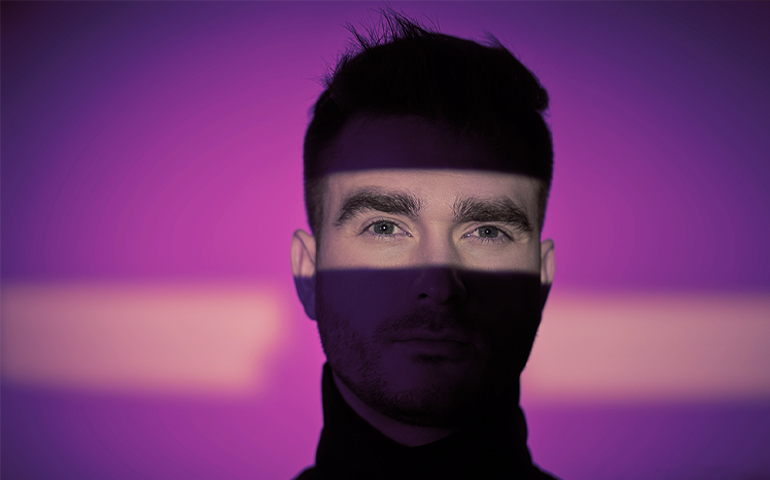
Our eyes are remarkably versatile when it comes to detecting different levels of light. And while nobody can see in total darkness, it’s extraordinary how little light is needed for our eyes to adjust and begin to see.
The natural adjustment of the eye to different light conditions is known as adaptation, and it’s carried out by three of the eye’s main structures – the iris, the retina, and the pupil.
From bright evening sunshine to near-total darkness, here’s how your eyes adapt to the different lighting situations we encounter every day.
How adaptation works
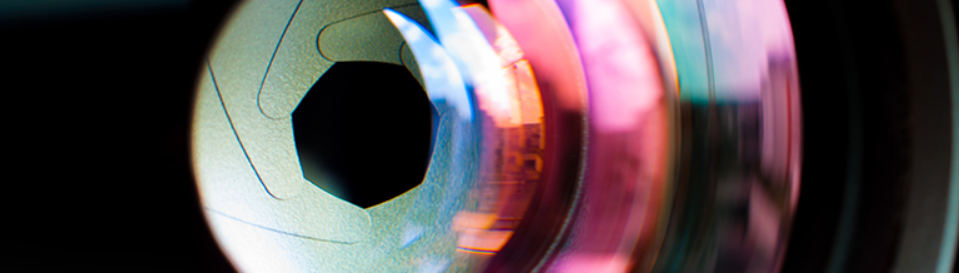
If you’ve ever used a simple compact camera, you may be familiar with the term “aperture” – the adjustable opening that allows light in so the camera can focus on an image. The human eye works in a remarkably similar way.
We know that the iris is what gives the eye its colour or pigment, but it’s also made up of tiny muscles that work in conjunction with the pupil. Together, they act as the eye’s gatekeepers – regulating how much light gets in. The pupil behaves in the same way as the adjustable aperture of a camera.
In dim light, the muscles relax, allowing the pupils to dilate and let in more light. In bright environments, the muscles contract, causing the pupils to constrict and minimise the amount of light the eye needs to focus.
Once light enters the eye through the pupil, it passes through the retina to reach light-sensitive cells lining the back of the eye called photoreceptors. These are divided into two groups based on their shape and function:
- Rods: responsible for night vision, they have lower resolution but are far more numerous.
- Cones: they contribute to daytime vision and are responsible for colour vision, though fewer in number.
The combined function of these two receptor cells allows our eyes to adapt to different light conditions – with the retina helping to shift the workload between rods and cones based on how much light the pupils are letting in.
How your eyes adjust to the dark
If you’ve ever wondered how it’s possible to see anything in a dark room with little or no light, you have the photoreceptors known as rods to thank. When you turn off the lights, you’ll notice that your eyes take a little time to adjust to the darkness. That’s because the light source you’ve just switched off “bleaches” the rods, and it takes time for them to regenerate rhodopsin (light-sensitive pigments).
This process – called dark adaptation – occurs more slowly than its counterpart (light adaptation), because our rods are more sensitive and 15 times more numerous than their equivalent: the cones. During this period of rhodopsin restoration (which can sometimes take up to an hour), our pupils dilate as much as possible to admit light from any nearby source that can help improve our vision in the dark.
How your eyes adjust to bright light
Have you ever left a cinema and stepped straight into a bright evening sunset? If so, you’ll be familiar with the overwhelming glare that momentarily dazzles your eyes and causes them to blink until they start to adjust.
The sudden flood of light sends a rush of stimulation to our pupils, triggering the photoreceptors to begin the process of light adaptation. Like dark adaptation, this automatic adjustment takes place at the back of the retina, involving both our rods and cones. However, since our cones are more agile than our rods – and fewer in number – their response time to sudden changes in light is faster. Cone cells regenerate around five times faster than rod cells, which is why we regain full vision more quickly in bright conditions.
What is light sensitivity?
Sudden changes in light can trigger light sensitivity in some people. Also known as photophobia, this occurs when bright light causes discomfort in the eyes. For some, it can result in headaches, nausea, and difficulty seeing normally after exposure to excessively bright or intense light.
While photophobia can affect people of any age, it is more common in those with lighter-coloured eyes or eye strain, and it can sometimes be a side effect of certain medications. Light sensitivity is a symptom of another underlying issue rather than a condition in its own right, and it can occur alongside other problems:
Causes of light sensitivity (photophobia):
- Migraines
- Facial pain (dental issues, meningitis, neuropathy)
- Dry eyes
- Light-coloured eyes
- Albinism
- Dilated pupils
- Corneal abrasions / retinal detachment
- Eye infections / inflammation
- Cataracts
- Glaucoma
- Drugs (both recreational and prescription)
- Wearing contact lenses incorrectly for extended periods
- Photokeratitis (eyes exposed to UV rays)
What to do if you have light sensitivity
Since light sensitivity usually occurs alongside another condition, the best approach is to identify the underlying cause. In most cases, light sensitivity will ease once the root cause has been found and treated.
For those who are naturally light-sensitive or have light-coloured eyes, we recommend taking precautions outdoors to protect against direct sunlight – such as wearing a hat or sunglasses with UVA protection.
If you notice you’ve developed photophobia after starting a new medication, speak to your GP about alternative options.
In any case, if light sensitivity is affecting you on an ongoing basis, is severe or painful, or even occurs in low-light conditions, please contact a medical professional.