
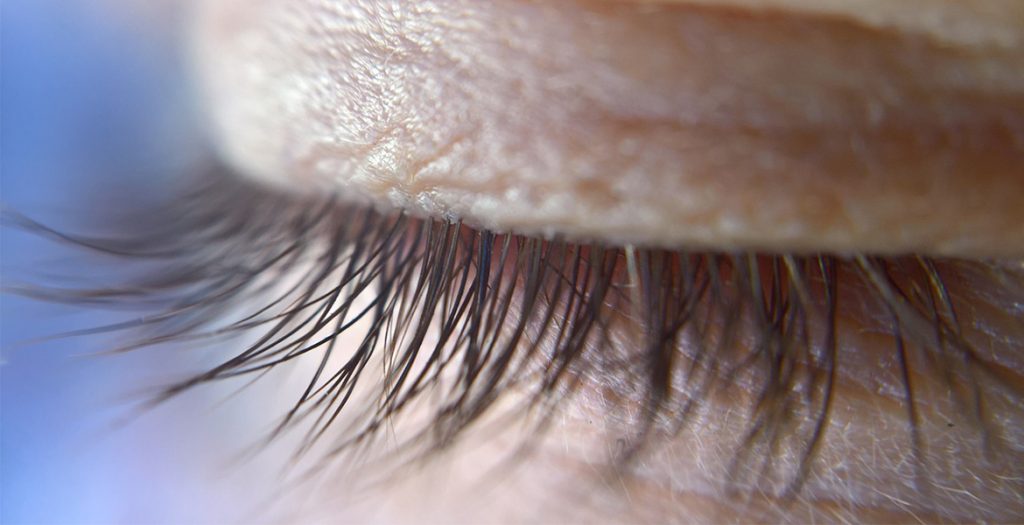
Riddle me this: we are red and irritated all over. What are we? The inflamed eyelids of someone suffering from blepharitis — and it is no laughing matter.
Blepharitis is a common condition that can develop at any age and, if left untreated, can last for years and may recur unless the person adopts a consistent eye hygiene routine. Eye care professionals report that 40% of patients have experienced it, and many of them are contact lens wearers.
The problem

So what exactly is blepharitis? Blepharitis is inflammation of the edge of the eyelids, where the eyelashes grow. Blocked glands become irritated, are often red and moist, and itch — and there may also be dry flakes that stick to the eyelashes.
Blepharitis affects the amount of lubrication in your eyes, which can be problematic for anyone, but especially for contact lens wearers.
The bad news is that it is unpleasant, but the good news is that it can be treated. The first step is that if you wear contact lenses, you should stop wearing them until symptoms improve.
The causes
Blepharitis is associated with dandruff, but it is also linked to the following conditions:
- Bacterial infection
- Rosacea (facial redness)
- Allergic reaction (to make-up, contact lens solutions or eye medications)
- Blocked sebaceous glands in the eyelid
- Lice or mites in the eyebrows
The symptoms
The signs of blepharitis are unmistakable, and you are sure to notice them.
Watch out for:
- Redness: Your eyes are likely to be red, swollen and watery.
- Itching: Your eyelids may be irritated and itchy, with a gritty sensation.
- Sticky eyes: Despite any crusting, eyelids can feel greasy. It is not unusual to wake up with eyelids stuck together.
- Flaking: The skin around the eye is likely to be flaky, and eyelashes may fall out or grow in different directions.
- Blinking: You may notice you are more sensitive to light and blink more frequently.
Potential complications
Blepharitis can also lead to other problems such as:
- Styes: Caused by infected sebaceous glands in the eyelids, these are lumps that appear on the outer part of the eyelid.
- Cysts: Formally called meibomian cysts, these are inflamed lumps that appear on the inside of the eyelid.
- Dry eyes: This condition is caused by tears failing to provide sufficient lubrication in the eyes, and tends to occur alongside blepharitis — so much so that doctors question which condition comes first and causes the other.
- Conjunctivitis: This condition is inflammation of the conjunctiva, the mucous membrane lining the inside of the eyelids and the front of the eyes.
Home treatments
Many cases of blepharitis can be treated at home. It is important to follow a home care routine consistently, and this can include a variety of warm water treatments designed to reduce build-up. You might try:
- Reducing inflammation with warm compresses on each eye separately.
- Rinsing eyelids with warm water and drying carefully.
- Washing eyes with water.
Professional care

If home remedies do not work or are not suitable due to underlying causes (such as rosacea or dandruff), professional care should be sought. Examples of professional treatment:
- In-clinic procedures carried out by a professional.
- Antibiotic ointments, creams and oral medication.
- Eye drops (usually steroids) to help reduce inflammation.
What next?
Good hygiene and warm water treatments as described are essential, as they can not only prevent the problem but also reduce the likelihood of symptoms recurring.
If you regularly wear contact lenses, we understand you will want to get back to wearing them as soon as possible. Practising good hygiene and using daily eyelid wipes will prevent blepharitis from recurring. Some opticians also recommend supplements such as omega-3 fatty acids.
Whatever your routine, make sure it becomes part of your daily habits. Once you are ready to return to wearing lenses, the best option for reducing the risk of future problems is daily disposable contact lenses. Fortunately, for most contact lens wearers these are also the most comfortable and practical way to correct vision. Always consult your optician to find out which lenses are best for you and the health of your eyes.