
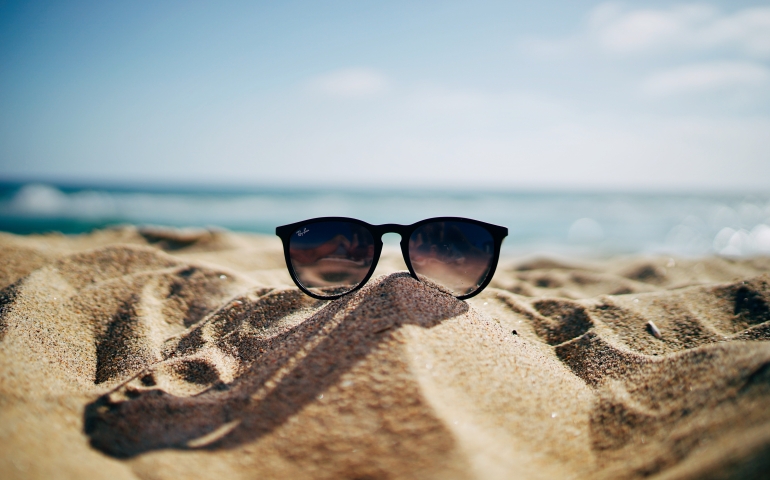
Choosing the right sunglasses to protect your eyes from UV rays, high temperatures and allergens can be a real challenge — particularly when you also want them to be affordable and stylish.
Here is what to look for when choosing a pair of sunglasses that suits your needs and offers the best possible protection for your eyes during the warmer months.
What to consider when buying sunglasses
Whether you wear glasses, contact lenses, or have perfect vision, sunglasses are one of the best ways to protect your eyes from the sun’s harmful rays, as well as from other issues such as irritation caused by pollen or dry eye.
So how do you make sure you’re choosing sunglasses that are right for you?
1. Check for UV protection
A good pair of sunglasses should offer 100% protection against both UVA and UVB rays. Depending on the level of sun exposure, these rays can cause light sensitivity, blurred vision, cataracts, or even permanent blindness.
Look for sunglasses with a label or sticker specifying 100% UVA protection. You can find these on the lenses themselves — look for a ‘CE’ mark or ‘UV400’ label.
2. Don’t be fooled by lens colour
From grey to brown, you can find lenses in a wide range of colours to suit your preferences.
When choosing sunglasses you like the look of, it is important to remember that darker lenses do not always mean better UV protection. Always check the label mentioned above to be sure the sunglasses provide the protection you need.
3. Size matters
The more coverage your sunglasses provide, the less your eyes are exposed to harmful rays. When looking for a new pair, consider the lens size and choose sunglasses that fully cover the eye area, or opt for oversized frames to prevent UV rays from entering at the sides.
Sunglasses that cover the full eye area also protect against other irritants like pollen and dust, which are common in the air — especially during the summer months. For contact lens wearers, these particles can get trapped beneath the lenses and lead to irritation and inflammation. Sunglasses are therefore a great way to give your eyes an extra layer of protection.
4. Polarised lenses do not block UV rays
Polarised sunglasses are designed to reduce glare caused when sunlight reflects off surfaces such as water or roads.
While this can be useful when sailing or driving, polarised lenses do not provide UV protection on their own. It is therefore important to check the label on polarised sunglasses to ensure they are also offering adequate protection for your vision.
5. Sunglasses are more than a fashion accessory
Sunglasses are a staple accessory for completing a summer look. However, it is worth remembering what they can do for your health.
Sujata Paul, Head of Professional Clinical Services and FBDO/CL contact lens optician at Lenstore, comments:
“While we often buy sunglasses because they are an essential summer accessory, it is important to remember their purpose and how vital they are in protecting our eyes from the sun. When choosing the right pair, we need to think beyond style and brand. We should consider how effective they are at reducing the risk of serious long-term eye health consequences, such as cataracts or vision loss.”
Keeping all of this in mind when buying your next pair of sunglasses will significantly reduce the chances of developing long-term vision problems. Put on your sunglasses this summer and protect your eye health for years to come.