
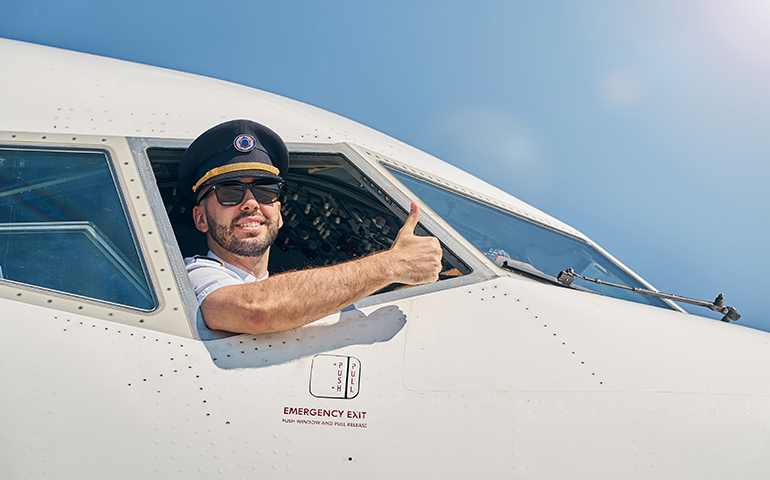
Landing your dream job takes determination, hard work, a constant drive to improve your skills and a strong motivation to succeed. Sometimes, though, even that isn’t quite enough. Certain professions come with strict health and fitness requirements — including near-perfect vision — to ensure you can carry out the duties the role demands.
It’s no surprise that many jobs requiring excellent vision involve situations where other people’s lives are at risk. Close and distance vision, colour vision, depth perception and peripheral vision are all essential in these contexts. To keep things under control, you need to identify and respond to potential threats quickly.
If your vision isn’t 20/20, don’t worry: glasses and prescription contact lenses can help compensate for minor imperfections, and innovations such as refractive surgery can, in some cases, help you pass your eye health assessment.
1. Military pilot
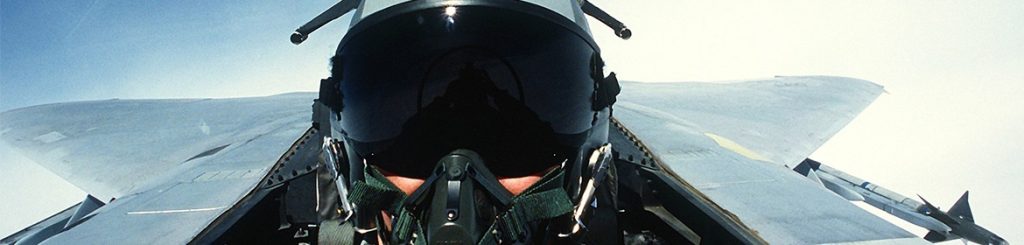
Military pilots must meet very rigorous vision criteria. Air Force pilots can only wear glasses with a lens power between -7 and +8 dioptres in any meridian. They must also pass the Ishihara test, which involves looking at a series of colour plates to identify any colour perception defects.
Applicants with deficient colour perception are not barred from joining the Air Force, but this condition does limit the types of duties they can perform. To become a military or helicopter pilot in most countries you will need:
- Uncorrected distance vision no worse than 6/12
- Corrected vision with glasses or contact lenses of 6/6 (or 20/20)
- Normal depth perception and colour vision
2. Firefighter
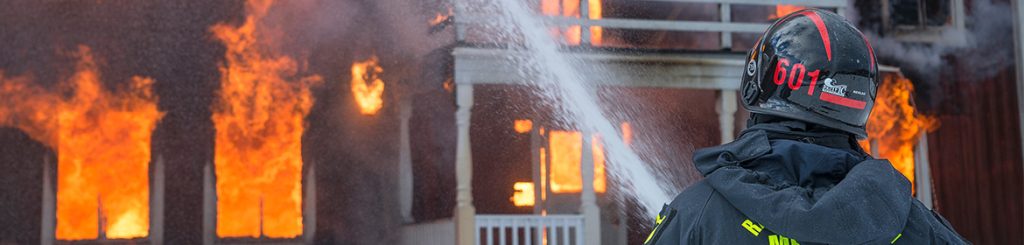
Firefighters deserve enormous credit for carrying out such a stressful and dangerous job every day. They face extremely challenging conditions — such as smoke and darkness — that demand excellent vision. Accurately judging distances, for instance, is particularly important when rescuing people trapped in a burning building. If you’re applying for the role, make sure of the following:
- Your uncorrected distance vision should be no worse than 6/18 in the better eye, and 6/24 in the worse eye
- Your corrected distance visual acuity must be at least 6/9 with both eyes open, and 6/12 in the worse eye
- You must apply at least one year after having refractive surgery (at least in the UK)
3. Police officer
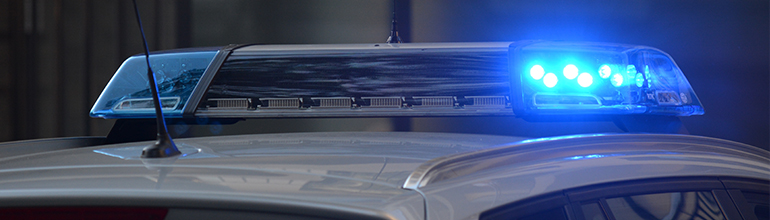
Have you ever considered a career serving your community as a police officer? To enforce the law and protect the public, accurate vision is an indispensable tool — it helps officers respond quickly while on duty.
As a police officer, you’ll often need to act as an eyewitness and be able to clearly identify potential suspects and possible crimes.
The minimum vision requirements to become a police officer (which you can meet with glasses or contact lenses) are generally as follows:
Distance vision:
- 6/12 or better in each eye, and 6/6 or better with both eyes open
- If you wear glasses or contact lenses, the uncorrected vision required will be 6/36 or better with both eyes open
Near vision:
- If you wear glasses or contact lenses, the minimum visual acuity required will be 6/9 with both eyes open
Certain colour vision deficiencies are not permitted if you wish to join the police service.
4. Airline pilot

Commercial pilots carry the enormous responsibility of transporting thousands of people through the skies every day. Knowing that every passenger’s safety rests in their hands demands an unshakeable ability to handle stress, along with excellent health, fitness and vision.
Before obtaining your pilot’s licence, you must have your eyes tested at a designated medical centre. Different vision requirements may apply depending on the aviation authority governing the country where the licence is issued. Once you obtain your commercial licence, you will be required to undergo regular checks to keep it valid.
The good news is that you can correct your vision with glasses or contact lenses, provided they bring you up to the 6/6 standard required to fly. For safety reasons, pilots must always carry a spare pair of glasses in case of an emergency.
5. Lifeguard

Lucky enough to have great vision and a love of sunny days at the beach? Then this could be the perfect career for you.
A lifeguard’s primary responsibility is to stay alert and spot any potential hazards in the water. That’s only possible with near-perfect vision.
When watching the sea for swimmers in difficulty, it’s essential to have clear vision at any distance, since incidents can occur both close to shore and further out.
If you’re a lifeguard who wears contact lenses, please be aware that swimming with lenses in carries health risks for your eyes. Learn more about the dangers of wearing contact lenses in water in our guide to swimming with contact lenses.
6. Photographer

More comfortable behind the camera than in front of it? Your dream of becoming a photographer could well be within reach.
While there are no standardised vision requirements to become a photographer, having an excellent eye for composition and light is essential. Fortunately for those with imperfect vision, you can compensate through practice — work on framing and composing visually striking photographs to build your portfolio. Once you find your own “vision” behind the lens, you’ll be one step closer to your new career.
As a tip, contact lenses are your best ally when shooting, as they give you a clearer, unobstructed view through the camera’s viewfinder. Browse our wide range of contact lenses so you can pursue your passion and become a great photographer.
To find out whether your vision meets the requirements of your dream profession, visit your optician before applying. Eye care professionals can help you understand how any vision problems — or corrective procedures — might affect your application. Best of luck!