

Macular degeneration is one of the leading causes of vision loss in Ireland. The condition typically develops as we age, and understanding it early is key to protecting your sight.
What is macular degeneration?
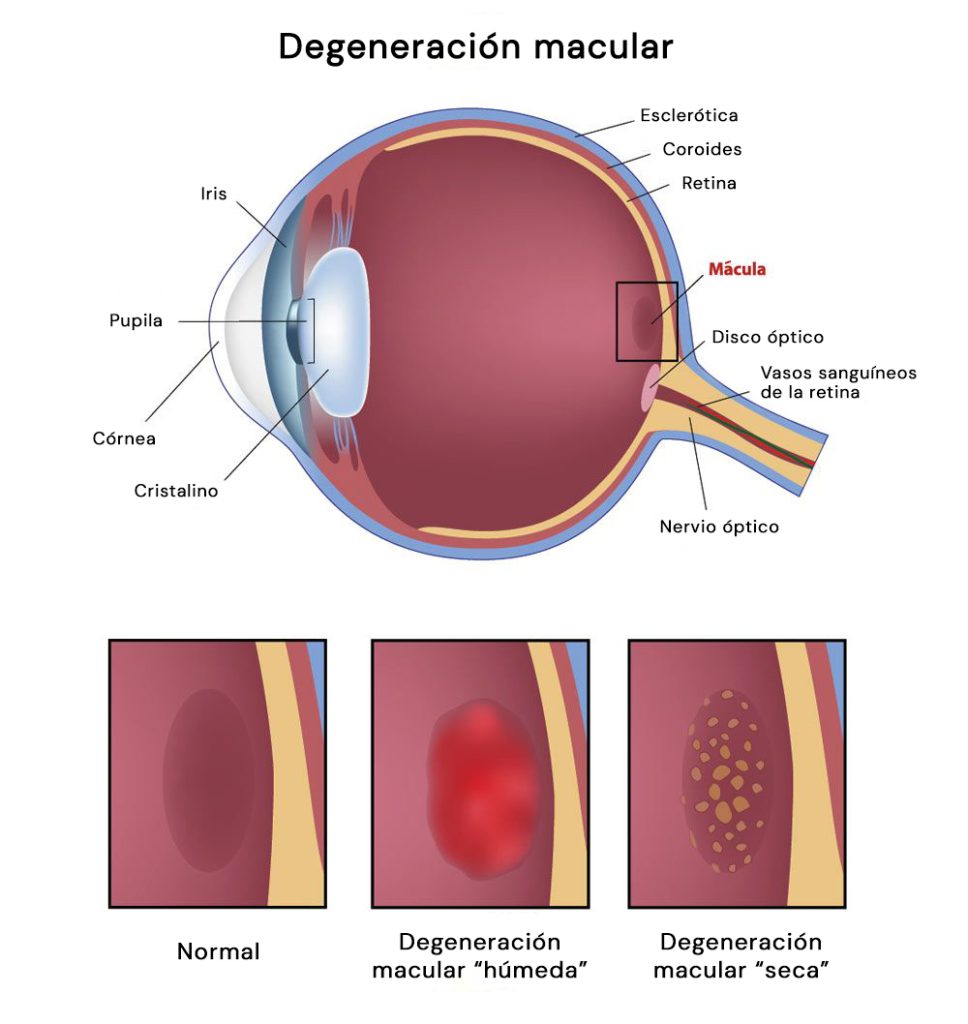
Age-related macular degeneration (AMD) is an eye condition that leads to the progressive loss of central vision. The macula is the part of the eye that contains cones — the light-sensitive cells responsible for central vision. AMD occurs when these cells begin to break down, which can result in blurred vision, faded colours and difficulty recognising faces.
Who is most at risk of macular degeneration?
Women are generally more likely to develop AMD, though the exact reason is not fully understood. The condition is also more common in older people — it is estimated that around 10% of people over 65 have some form of AMD.
Symptoms of macular degeneration
Depending on the type of macular degeneration, symptoms may develop gradually or over the course of just a few days. You may notice some loss of central vision, making it harder to see objects directly in front of you, while your peripheral vision remains intact. This can eventually result in a permanent blind spot in the centre of your vision.
Dry age-related macular degeneration
Dry AMD (DAMD) is caused by the build-up of fatty deposits or proteins in the eye called drusen. This typically happens as we age, so dry AMD is more common in older people. Although our vision gradually deteriorates over time, dry AMD progresses to wet AMD in around one in ten cases.
Wet age-related macular degeneration
Wet AMD (WAMD) is a more serious form of the condition and can result in vision loss within just a few days. It occurs when new blood vessels grow in the eye to compensate for the macula not functioning properly. These vessels can cause bleeding and scarring, leading to severe vision damage.
How to reduce your risk of age-related macular degeneration
1) Stop smoking:
Smoking is one of the leading causes of vision loss from AMD because it accelerates the condition’s progression. It also increases the level of oxidants in the bloodstream and the eyes, which makes treatment for AMD less effective.
2) Cardiovascular health and maintaining healthy blood pressure:
High blood pressure (hypertension) can promote macular degeneration by restricting blood flow in the vascular layer of the eye (the choroid). This can prevent the eye from receiving sufficient oxygen, increasing the risk of wet AMD and central vision loss. Loss of oxygen also speeds up AMD progression. Ensure you take prescribed medication for any cardiovascular or blood pressure conditions and follow your doctor’s advice.
3) Increase antioxidants in your diet:
In AMD, the retina becomes sensitive to oxidative stress — a process by which free radicals destabilise healthy molecules by replacing electrons with oxygen. People with AMD can develop oxidative stress throughout the body, which over time can reduce the body’s ability to clear damaged eye cells.
Antioxidants prevent or reduce this damage by supplying electrons to free radicals, preventing healthy cells from being harmed. A healthy diet rich in fruit and vegetables provides antioxidant vitamins that reduce the risk of developing macular degeneration. Some research from the National Eye Institute suggests that a specific combination of antioxidants and minerals, taken daily as a supplement, may slow or halt the progression of early or intermediate AMD.
4) Reduce your intake of simple carbohydrates: Eating fewer simple carbohydrates can slow or even halt the progression of AMD. Switching to more complex carbohydrates is one of the simplest ways to reduce your risk.
Good carbohydrates to include in your diet:
- Wholegrains
- Fibre-rich foods such as fruit and vegetables
- Beans and legumes
Simple carbohydrates to avoid:
- Processed sugar
- Fizzy or sugary drinks
- Fruit juice
- Pastries
- White bread
- Ice cream
- Sweets
- Cakes, biscuits and sugary cereals
5) Include omega-3 fatty acids in your diet:
Healthy omega-3 fatty acids can reduce the risk of developing macular degeneration. They are found in fish such as salmon, tuna, mackerel, herring, cod and sardines. Nuts such as walnuts and seeds including flaxseed, hemp and chia are also rich in omega-3.
6) Maintain a healthy weight and exercise regularly:
Reducing your calorie intake helps with weight management, but increasing the amount of exercise you do each day is equally important.
7) Wear eye protection — sunglasses:
Prolonged exposure to the sun’s UV rays can damage the retina, accelerate AMD progression and contribute to cataract formation. Wearing sunglasses can help reduce this risk. For maximum UV protection, look for sunglasses with a UV400 rating — these reduce exposure to harmful UV rays by around 99%.
8) Regular eye examinations:
As we get older, regular eye tests should become a routine part of looking after your health. Eye exams can help identify early signs of macular degeneration and keep you alert to any changes in your vision if you do develop AMD.
What about macular degeneration in younger people?
If you are under 50 and developing symptoms of macular degeneration, the cause is likely to be a genetic condition. Some forms that have been identified in younger people include Best disease, Stargardt disease and myopic macular degeneration.
Coping with AMD
Vision loss can be deeply worrying. You may find it helpful to seek support and guidance from charities and foundations during this difficult time. While the condition can feel isolating, it is not uncommon — and there is a great deal of support available. Social services in your area can provide guidance on mobility, and there are many ways to make the most of the vision you still have.
Lenstore is one of Ireland’s leading online contact lens retailers. We offer the most popular contact lens brands at prices well below those typically found in opticians. To browse our range of contact lenses, click here to find the right lenses for you.