
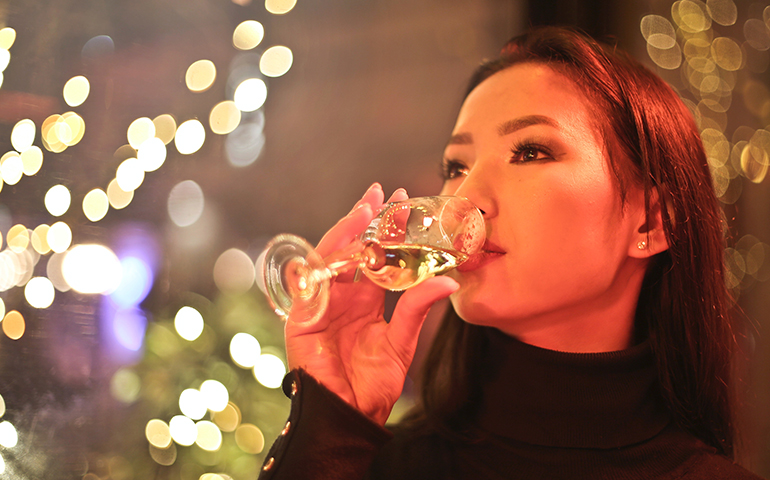
When there’s something worth celebrating, alcohol is rarely far away. It’s a familiar companion at birthdays, parties, nights out, and social gatherings of all kinds.
The effects of drinking too much are well known. But does alcohol also have a negative impact on our eye health? It does – and not just in the obvious ways. Here’s how excessive drinking can affect your eyes, and what you can do about it.
Blurry vision: after drinking heavily, it’s common to notice blurry or double vision. This actually has more to do with the brain than the eyes themselves – our brain allows us to see a clear image by merging visual input from both eyes into one. Under the influence of alcohol, the communication between the eye muscles and the brain is disrupted, causing blurring or double vision.
Dry eyes: even a small amount of alcohol can cause or worsen dry eyes, as alcohol affects the composition of the tear film.
Delayed pupil response: the pupils constrict less than normal under the effects of alcohol. This can cause one pupil to be more dilated than the other and make it harder to make out objects in the dark.
Eye twitching: drinking a lot of alcohol can cause the eyelids to twitch.
Long-term damage
Alcohol can have an immediate effect on how our eyes work, but it can also cause lasting damage if consumed heavily over a long period of time.
Increased risk of cataracts: several studies have shown that increased alcohol consumption raises the risk of cataracts.
Increased risk of macular degeneration: as well as cataracts, alcohol may also be a risk factor for macular degeneration.
Poor vitamin absorption: alcohol can cause liver damage, which impairs the liver’s ability to absorb vitamins. A vitamin deficiency can cause night blindness, and a deficiency of vitamin B1 in particular can weaken or even paralyse the eye muscles.
Vision problems in newborns: drinking large amounts of alcohol during pregnancy can affect the healthy development of a baby’s eyes.
Optic neuropathy: optic neuropathy can be triggered by very high alcohol consumption, which can in turn lead to vision loss.
How can I reduce the risks?
Drink plenty of water: alcohol draws water from our body as it tries to flush out the toxins. Aim to drink at least one glass of water alongside each alcoholic drink to maintain your body’s fluid levels.
Eat well: make sure you’re not drinking on an empty stomach. Fatty, calorie-dense foods are helpful here, as they slow the absorption of alcohol into the bloodstream. Sugary foods, on the other hand, can speed up the process.
Pace yourself: to avoid becoming intoxicated, it’s advisable to drink slowly. For example, one alcoholic drink per hour alongside a glass of water.