
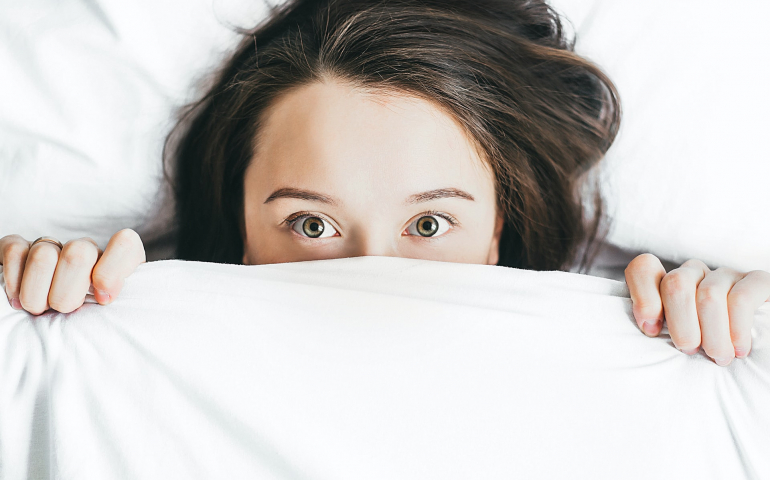
Sleep is precious. It can fill our day with positivity and give us the energy and focus we need to be the best version of ourselves. Sleep refreshes our minds and gives our bodies – including our eyes – the chance to rest and recover. Let’s delve into the science of sleep and share some helpful tips for getting a great night’s rest, night after night.
The stages of sleep: what happens at each one

Sleep may look peaceful from the outside, but the brain and body are hard at work. Each night, our body moves through five different stages of sleep: four stages of non-rapid eye movement (NREM) sleep, and one stage of rapid eye movement (REM) sleep. Each stage plays a different role in restoring the brain and body.
The first four stages involve a progression from light sleep – during which the muscles begin to relax and the heart slows – through to deep sleep, where muscles repair and recharge.
The final stage – REM sleep – typically begins around 90 minutes after falling asleep and involves heightened brain activity and very vivid dreams. During this stage, your eyes will move rapidly back and forth as the brain processes, organises, and stores information from the day. Some research suggests that REM sleep regulates our stress levels, helping us think more clearly the following day. Researchers aren’t entirely sure why our eyes move during REM sleep, but it’s thought to be linked to ‘scene changes’ within our dreams.
Why is getting enough sleep so important?

We’ve all experienced fatigue, irritability, and lack of concentration after a poor night’s sleep. But getting the recommended seven to nine hours can affect far more than our mood or motivation. It also plays an important role in preventing health problems such as obesity, heart disease, and diabetes.
Just like the rest of our body, our eyes need sleep to rest and recover. Without enough sleep, eyes can feel dry and gritty, we may notice blurred vision, and sensitivity to light can increase.
A common effect of sleep deprivation and fatigue is eyelid twitching, also known as myokymia. While eyelid twitches can be uncomfortable, they’re usually temporary and tend to disappear once you catch up on sleep.
Tips for a good night’s sleep

Build healthy habits into your day
Practising healthy habits during the day can contribute to a better night’s sleep. Light is a powerful cue for our bodies. Getting exposure to sunlight in the morning not only signals to our brain that it’s time to wake up – it also helps regulate our sleep patterns.
Regular physical activity has also been shown to have powerful benefits for sleep. But it’s important to time exercise wisely – try to do it at least three hours before bed.
Other daily habits that support good sleep include eating a healthy diet, limiting naps, and avoiding stimulants like alcohol, caffeine, and nicotine.
Wind down before bed
Winding down before bed can reduce physical and mental stimulation and help you sleep better. The blue light from digital devices such as phones, laptops, or the TV can affect sleep quality. Try to limit screen time at least an hour before bed. Instead, you could have a warm bath, read a book, or try meditating for 15 minutes. Gentle yoga stretches can also help relax the body. And while it may sound obvious – try swapping the alcohol or caffeine for a warm non-caffeinated drink instead.
Establish a regular sleep routine
Sticking to a regular sleep routine will help your body settle into its natural rhythm and make it easier to both fall asleep and wake up. A consistent bedtime routine – such as putting on your pyjamas, removing your contact lenses, or brushing your teeth – can signal to your brain that it’s time to rest.
Create a sleep sanctuary
With the stresses of modern life, it’s not always easy to make your bedroom a calm and peaceful haven. But where possible, try to keep it as comfortable and clutter-free as you can, and keep digital devices out of the room. Since we spend a third of our lives in bed, it’s worth investing in a comfortable mattress, duvet, and pillows. If light and noise disturb you, try using an eye mask or ear plugs. While the room should be comfortable, experts recommend an ideal sleeping temperature of 16–18°C.
Before you go to sleep, remember to take out your contact lenses. This gives your eyes the chance to breathe and helps keep them healthy and infection-free. You can find easy, expert tips on how to clean and store your lenses here.
Sweet dreams!