
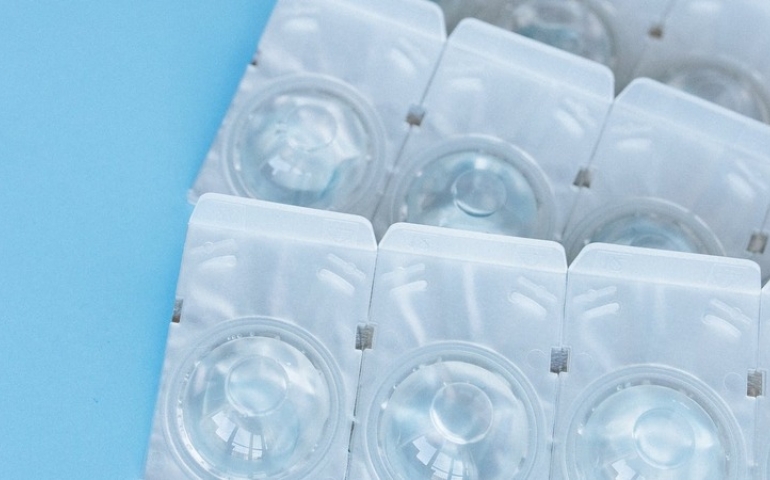
What are silicone hydrogel contact lenses?
Silicone hydrogel contact lenses are soft contact lenses preferred by many over standard hydrogel or rigid lenses for their higher oxygen permeability.
How is silicone hydrogel made?
Silicone hydrogel is made from different materials depending on the manufacturer and lens type. However, all of them use a combination of hydrophilic (water-loving) gel – also known as hydrogel – which is a chain of water-attracting molecules, alongside a silicone polymer with high oxygen permeability.
Types of silicone hydrogel contact lenses
Silicone hydrogel contact lenses are available in different wearing schedules:
Daily lenses
Daily silicone hydrogel contact lenses are designed to be worn for a single day and discarded before bedtime. They’re ideal for occasional lens wearers, require no maintenance, and are an affordable option.
Fortnightly lenses
Fortnightly silicone hydrogel lenses can be worn for up to two weeks, then removed, cleaned, and stored overnight. These are a great option for regular contact lens wearers who want the freshness and comfort of a daily lens with greater economy.
Monthly lenses
Monthly silicone hydrogel contact lenses can be worn for up to 30 days before being replaced with a new pair. Like fortnight lenses, they must be removed and cleaned at the end of each day before being stored overnight. They’re a cost-effective solution for anyone who wears lenses every day.
Advantages of silicone hydrogel contact lenses
The best-known advantage of silicone hydrogel lenses is their higher oxygen permeability, which surpasses that of standard hydrogel lenses. Many wearers find them significantly more comfortable and better for eye health.
Oxygen permeability
Compared to standard hydrogel lenses, the oxygen permeability of silicone hydrogels is significantly higher. This helps prevent hypoxia – a condition where the eye is deprived of oxygen – which can increase the risk of eye infections.
Greater comfort
Silicone hydrogels contain less water than standard hydrogel lenses, which reduces the risk of the lenses dehydrating during the day. Combined with higher oxygen permeability and a design that offers better resistance to deposits, many wearers find these lenses consistently comfortable throughout the day.
They tend to cause less redness, irritation, or discomfort – particularly during extended wear.
Disadvantages of silicone hydrogel contact lenses
Not everyone prefers silicone hydrogel lenses over standard hydrogel. While some find that silicone hydrogels attract more lipids, others have concerns about the slightly firmer material or the higher price point.
Firmness
Thanks to the addition of silicone, these lenses hold their shape better and are more durable than hydrogel lenses. While some wearers prefer silicone hydrogel lenses because insertion and removal is easier, others may find them a bit harder to handle initially compared to standard hydrogel lenses.
Newer generations of silicone hydrogel lenses have addressed this issue and aim to provide a more flexible, comfortable fit.
Cost
Silicone hydrogel lenses are considered a premium product and typically cost more than standard hydrogel lenses. Those who find equal or greater benefit in hydrogel lenses may not want to pay the higher price.

Silicone hydrogel and allergies
If you suffer from seasonal allergies such as hay fever, or are affected year-round by irritants like dust or pet hair, you may experience increased irritation with contact lenses.
Irritants can stick to the surface of the lens and make itchiness and redness worse.
Dust and seasonal allergies
Whether you wear hydrogel or silicone hydrogel lenses, if you’re allergic to particles such as pollen or dust, you may be advised to switch to daily lenses, as even the most thorough cleaning of reusable lenses (fortnightly and monthly) cannot guarantee all irritants are removed at the end of the day. Here are some useful tips for managing eye allergies during hay fever season.
Allergic reactions to silicone hydrogel contact lenses
Although some people may experience itching, discomfort, and watering while wearing silicone hydrogel lenses, there is no evidence to suggest that these lenses themselves cause an allergic reaction.
That said, your eyes shouldn’t feel uncomfortable while wearing lenses, so it’s worth asking your optician about trying a different lens type.
Are silicone hydrogel contact lenses better?
Every eye is unique and there are different parameters to consider when choosing contact lenses. While silicone hydrogel is a newer, high-quality material that suits many contact lens wearers, it’s not the right choice for everyone.
Hydrogel contact lenses
Hydrogel contact lenses are thin and flexible, with a higher water content than silicone hydrogel lenses. While the higher water content helps keep eyes feeling comfortable, water can evaporate over a long period of wear, which may become noticeable towards the end of the day.
Want to find out more? Take a look at our article on Hydrogel vs Silicone Hydrogel.
Before purchasing, always ask your optician for advice on which type of contact lens – hydrogel or silicone hydrogel – is most suitable for your eyes.