
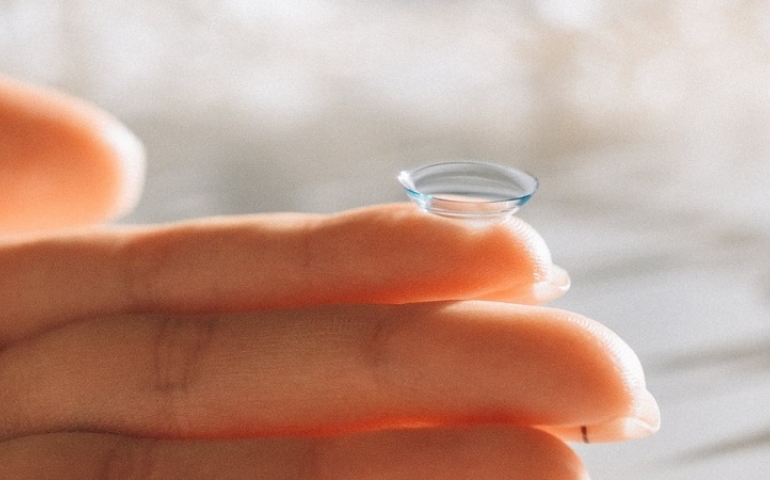
Are contact lenses safe?
Yes — when used correctly and in line with your optician’s recommendations, contact lenses are a safe option for correcting refractive errors. Following your optician’s advice is especially important, as neglecting proper lens care can cause discomfort and risk your eye health.
Can contact lenses damage your eyes?
Soft contact lenses are manufactured with materials and technologies designed to keep eyes healthy and comfortable. A smooth surface design can protect against deposit build-up, while breathable material allows oxygen to pass through the lens.
Each contact lens varies in material, parameters, and design because everyone’s eyes are different. A contact lens fitting with your optometrist will ensure you’re wearing prescribed lenses that support your eye health.
Contact lens fitting
A contact lens fitting appointment is an essential step in ensuring the lenses you wear are safe and suited to your eyes.
During the fitting, your optometrist will ask several questions about your lifestyle — whether you spend your working day in front of a screen, your hobbies, and how often you’d like to wear lenses.
They will then examine the health and measure the front surface of your eye. Based on these checks, your optometrist will provide contact lenses suited to your needs and prescription details. They’ll help you put them in and take them out, assess the lens fit and visual acuity while you’re wearing them, and arrange a trial period.
Once the trial period is complete, you may be called in for a follow-up appointment, after which your optician will provide you with your contact lens prescription.
Wearing daily or reusable contact lenses safely
Contact lenses are a simple and convenient alternative to glasses. There are a few things to keep in mind to make sure they’re safe for your eyes.
Daily disposable lenses
Daily disposable contact lenses don’t need to be cleaned — they’re worn once and discarded at the end of the day. They’re an excellent option for those who only wear lenses occasionally, such as for special events.
Wearing daily lenses for longer than intended
To keep your eyes safe and healthy, don’t overuse your daily lenses.
Wearing daily lenses overnight or for multiple days can attract bacteria that may lead to infections, as the protective technologies aren’t designed to last beyond a single day’s wear.
Switching from daily to monthly lenses
There are no direct equivalents between daily and reusable lenses, as the materials always differ — reusable lenses are made to last much longer.
If you want to switch to a different type of lens, you’ll need to book a new fitting appointment with your optician. This ensures the new lenses are suitable for your eyes, and your optician can advise you on how to clean and store them correctly.
Reusable contact lenses
Soft reusable lenses are suitable for fortnightly or monthly wear, provided they’re removed at the end of each day, cleaned, and stored properly overnight.
Some reusable lenses are also approved for extended wear over several nights, with your optician’s approval.
Keeping fortnightly and monthly lenses comfortable
Reusable lenses are a great option for those who wear lenses almost every day. To ensure they feel comfortable from the first to the last day of use, following a proper cleaning routine is essential.
Always use the contact lens solution recommended by your optician, and use fresh solution in your lens case every time you store them. It’s also recommended to replace your lens case each month.
Dos and don’ts
Contact lenses are a convenient, lightweight option for correcting your full field of vision while keeping eyes healthy and comfortable.
However, they are considered medical devices placed directly on the eye, so there are a few important things to keep in mind when wearing lenses to eliminate the risk of infection.
Contact lenses and water
Water — whether from the tap or a lake — contains amoeba that can be harmful to the eyes. Amoeba can settle on contact lenses and cause painful infections, such as Acanthamoeba keratitis. It is therefore important to avoid any contact between your lenses and water, whether in the shower or swimming in the sea.
Never use water to clean your contact lenses either.
Sleeping in contact lenses
Unless your contact lenses are approved for extended or continuous wear, and you have discussed this option with your optician, you should avoid sleeping in them. This includes naps.
When you sleep, your eyes lose moisture, which in turn dries out lenses that aren’t designed for extended wear. Dry lenses can be harder to remove and may feel rigid and irritating.
When to seek medical help
Regular contact lens check-ups ensure your prescription is up to date and allow your optometrist to examine your eye health.
However, if you ever feel that something isn’t right with your lenses, you can contact your optometrist at any time to raise your concerns.
Discomfort or irritation
If your usual contact lenses suddenly cause you discomfort, irritation, or pain, remove them immediately. Try thoroughly cleaning the lenses and checking for any imperfections, such as tears at the edge or particles on the surface. If this doesn’t solve the problem, replace the lenses with a fresh pair or wear your glasses for the day and discard the damaged lenses.
If discomfort or redness does not clear up within 24 hours of not wearing lenses, contact your optometrist or GP as soon as possible to ensure your eye health has not been affected.