

Contact lens wearers are familiar with the dos and don’ts of lens care and wear. But have you ever wondered why you shouldn’t sleep in your lenses? Or why it matters which solution you use? Our in-house optometrist, Roshni, reveals all.
1. Why shouldn’t I sleep in my contact lenses?
Our eyes need oxygen to fight infection and stay healthy. When we’re awake, blinking keeps the eyes moist and allows oxygen to flow freely. But when our eyes are closed, the cornea receives less oxygen.
Although modern lenses are more breathable than ever, sleeping in them adds an extra barrier preventing oxygen from reaching the cornea. As well as causing dryness, this can cause the cornea to swell, making it susceptible to infection. A good general rule is to remove your lenses at the end of the working day — that way you’re less likely to fall asleep with them in.
Some types of reusable lenses are approved for overnight wear, which is a great option if you’re prone to dozing off with your lenses in. Extended-wear lenses aren’t suitable for everyone, so make sure you speak to your optician before making the switch.
2. Why should I put my lenses in before applying make-up?
First, applying make-up is a fiddly business, so you’ll want to see clearly what you’re doing. Second, if you put your lenses in before applying make-up, it’s less likely that cosmetics will transfer from your hands to your lenses. Particles of make-up settling beneath a lens are uncomfortable and can even lead to infection.
When removing make-up, do it the other way around. Take your lenses out before removing your make-up, and you’re sorted.
3. Can I extend the life of my monthly lenses?
For cost-saving reasons, it can be tempting to wear your lenses beyond their recommended lifespan. But wearing lenses past their intended duration can lead to discomfort and infections.
Over time, protein deposits and allergens build up on the surface of lenses. While cleaning your lenses helps to prevent this, lens solution doesn’t remove 100% of deposits.
In addition, when lenses exceed their intended lifespan, the built-in channels that allow oxygen to flow start to break down. Without enough oxygen, the eyes can become uncomfortable and dry. To get the most from your lenses and enjoy clear, comfortable vision, it’s important to follow the recommended replacement schedule.
4. Why is it unsafe to top up contact lens solution?
Topping up or “refilling” lens solution dilutes its disinfecting power, which can create a risk of eye infection. Lenses collect dirt and debris throughout the day, and some of that ends up in the solution. If you reuse the same solution, you’re likely to contaminate your lenses each time you store them. If you’d rather avoid the bother of solutions altogether, daily disposables are a convenient, hassle-free alternative.
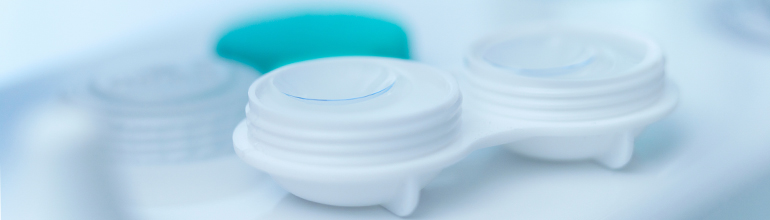
5. Why do I need to clean and replace my lens case?
You wouldn’t put clean clothes into a dirty bag, would you? In the same way, you wouldn’t want to store your clean lenses in a dirty case overnight. Cleaning the case after every use prevents bacterial build-up on the lenses and reduces the risk of infection.
It’s a quick and simple process. Just discard the old solution, then rinse and refill the case with fresh solution. Remember to replace the case every two to three months, even if it still looks perfectly clean.
6. Why can daily disposable lenses only be used once?
The great thing about daily disposable lenses is that they can be thrown away at the end of a full day of wear, with no cleaning or solutions required.
Because daily lenses are designed for single use, the material is not resistant to deposit build-up or extended wear. If you try to reuse them, the surface starts to break down and dirt and debris can become trapped inside the lens, leaving you exposed to infection. Throwing your lenses away after each use is the easiest way to keep your eyes clear, comfortable, and healthy.
7. Why can’t I clean my lenses with water?
Water may look clean, but it carries all kinds of harmful impurities that can contaminate your contact lenses and cause infections. Water can also cause lenses to change shape, swell, and stick to the eyes — which is uncomfortable and can scratch the cornea.
Even purified bottled water can contain bacteria. Keep things clean by using only the appropriate cleaning, storage, and disinfecting solutions for your lenses.
8. Why shouldn’t I flush my lenses down the toilet?
Contact lenses are made of plastic, so flushing them down the toilet can contribute to marine environmental pollution.
The good news is that lens manufacturers are continuously evolving their processes to make more materials recyclable. Today, soft lenses, blister packs, cardboard packaging, and lens cases can all be recycled through a local scheme. Contact lenses themselves are too small for home recycling. If you don’t have access to a local recycling scheme, the best thing you can do is put your lenses in the bin.
The bottom line?
Contact lenses give us the freedom and flexibility to enjoy the things we love without needing to wear glasses. Like most things, they come with their own guidelines — but it’s these simple habits that help us get the most from our lenses. You’ll find more helpful lens care tips on our Lensblog.